A significant commercial milestone: product on the shelf, ready for partners to build with.
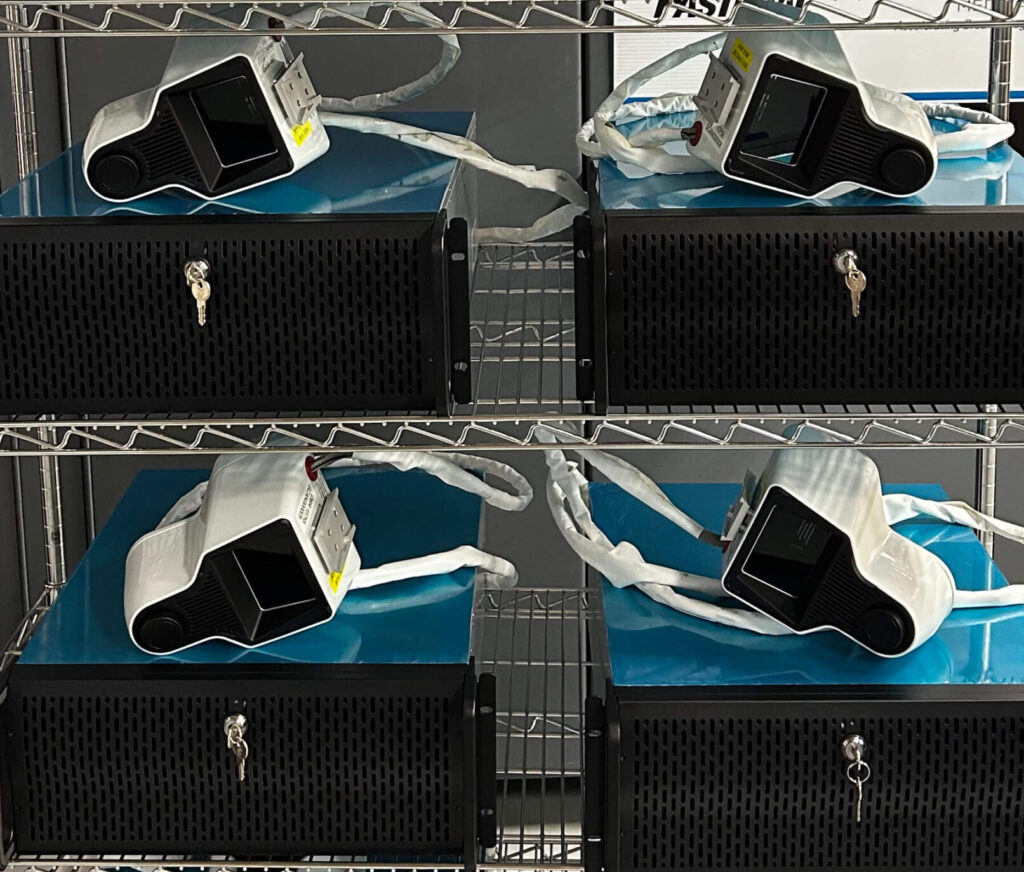
AUSTIN, Texas – July, 22 2026. Orthopedic robots are closer than ever to navigating without pins or arrays: VISIE Inc. today announced that the first production units of its computer vision system have come off the line at its contract manufacturer. The sub-component technology, which lets robotics and navigation manufacturers build robots that see what surgeons see, is now ready for partners to integrate.
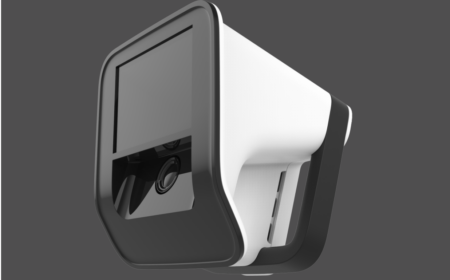
The first batch of VISIE’s computer vision systems moves directly into verification and validation (V&V), the structured testing that anchors VISIE’s imminent FDA submission, with the next units off the line shipping to integration partners as development kits. The system is built under a full quality management system (QMS), the same processes that will govern commercial production, and equipped with an API for rapid integration. It also features VISIE’s proprietary Continuous Anatomic Auto Tracking (CAAT) that enables surgical robotic systems to see and continuously track anatomy, without pins, arrays, or manual registration.
“This is much more than another prototype,” said Doug Fairbanks, CEO of VISIE Inc. “The last nine months have been transformational. For years, the question was whether this technology could work. Now the question is how fast our partners can integrate it and take it to market. VISIE is ready to ship dev kits.”
The milestone follows a rapid progression: VISIE first demonstrated CAAT in late 2024, executed the first pin-free knee bone cuts using spatial computing in mid-2025, and launched its partner APIs for robot-agnostic integration earlier this year.
The development kits will support partner system integration, technical evaluation, and continued product development. VISIE’s computer vision system is not yet FDA cleared and is not available for sale or clinical use.
Today’s navigation systems rely on arrays, reference markers fixed to the patient with pins drilled into bone, plus manual registration of anatomic landmarks before a robot can operate.
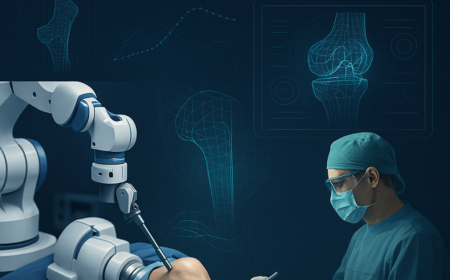
Throughout the procedure, the robot never sees the patient, only the arrays; if one is bumped, splashed with fluids, or shifts, the system must be re-registered mid-surgery. These steps add time, disrupt workflow, and leave the robot blind to the anatomy itself. VISIE’s computer vision system is designed to replace them with continuous, direct 3D vision – allowing robotic systems to see patient anatomy the way surgeons do.
Learn more at www.visievision.com