VISIE 3D scanners are Investigational Devices and are not available for sale.

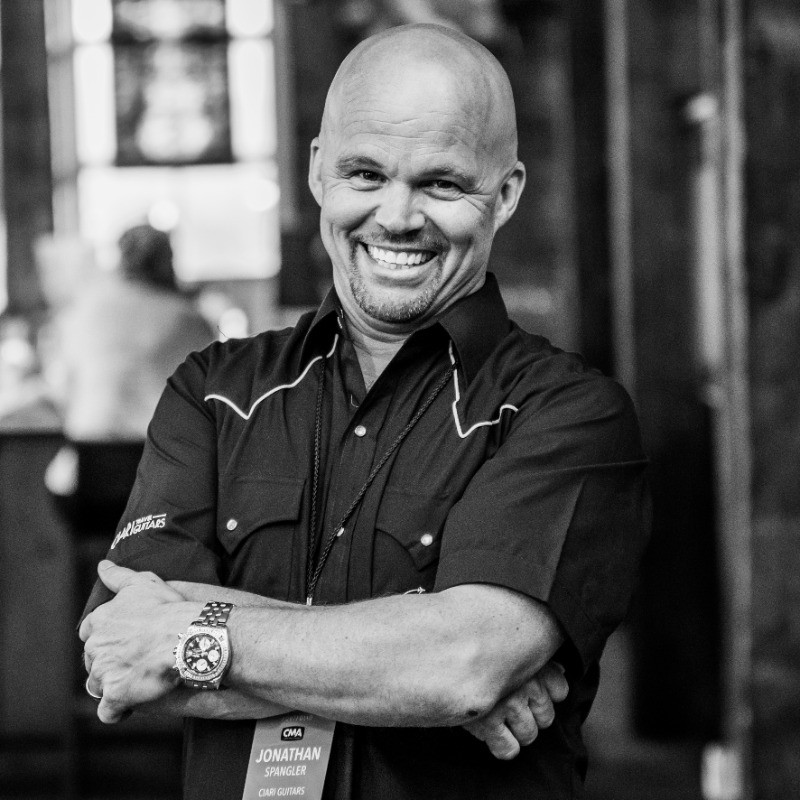
Profile: Jonathan Spangler

Patenting with Purpose

“One of the most valuable inventions that Jonathan Spangler has ever protected, a revolutionary system and method for safe and reproducible minimally invasive spine surgery, was once rejected by the patent office because of a children’s game. The invention was a neurophysiology-enabled instrumentation system that stimulates and monitors nearby nerves as instruments are advanced through the nerve-rich psoas muscle towards the side of the spine.  

It lets the surgeon know if they are getting close to nerves so they can actively negotiate past them to create a minimally invasive lateral operative corridor, avoiding the well-known perils of posterior and anterior spine surgery approaches. The US Patent and Trademark office cited prior art against the application: The instructions for Operation – the 1960s game where a buzzer goes off if your tweezers touch the wrong spot.

“His team did overcome the objection and the technology helped NuVasive become a leading company in the global spine surgery market. But the experience did underscore the fact that protecting sophisticated technology takes more than filing paperwork. You have to really understand the underlying technology of an innovation to be able to explain not only where the exact differentiation lies, but why that differentiation matters, be it patient safety, ease of use, lowering costs in the healthcare system, preventing revision surgeries, etc…  That’s the experience and judgement that Jonathan Spangler brings to VISIE, where he leads intellectual property strategy.

An engineer first

Spangler studied biomedical and electrical engineering at Marquette University. He describes the small number of people who elect to study first engineering, then go to law school, then take the patent bar exam (in addition to a state bar exam) as “gluttons for punishment.” He is one of them. At law school, he was drawn to the intersection of technology and commercial value. “Patent law within life sciences? What a blessing.”

While still in law school, he spent a summer at the US Patent and Trademark Office’s Patent Academy, training as a Patent Examiner. Seeing the process from the examiner’s side taught him something many founders never understand: a rejection isn’t the end. It’s the start of a conversation. If you understand what examiners need and you are a “good steward of their time,” you can usually find common ground. Relationships built on trust over years matter more than any single application. This was a valuable lesson that stood him in great stead during the rest of his career.

Building IP from the ground up

After working at specialist patent firms, including a top medical device patent prosecution firm and later the then-largest patent litigation boutique in the U.S., Spangler moved in-house. He built an IP department from scratch at A-Med Systems, a cardiac surgery startup. In 2001 he joined NuVasive as Chief Patent Counsel, and its first in-house attorney, a testament to its commitment to innovation.

Over the next 15 years, NuVasive grew from around 30 employees and $2M+ in revenue into the global leader in minimally invasive spine surgery with more than 2,000 employees and $800M+ in revenue. As its top IP executive, he built a team and created an award-winning global patent portfolio that grew by more than 800%.
“That growth was built on strict discipline, not just volume. NuVasive was not short of new ideas, in fact there were far too many to patent. Spangler’s response was to apply a business lens and categorize each invention based on certain key factors: commercial vs. non-commercial, strategic value, and level of differentiation. Commercial, highly-differentiated IP assets garnered the highest investment both geographically and in the number of applications.  Commercial yet less differentiated warranted a narrower geographic focus and fewer applications.  Strategic IP assets split that difference.

“This categorization may sound obvious, but in practice it takes years of experience with patents to be able to distinguish one from the other – experience of them being tested by competitors, in court and at the examiner’s office. It also takes experience to identify what’s truly an innovation. Patents require novelty and must be non-obvious and most inventors are far too close to the matter to be able to accurately identify either. Many new ideas do not hold up under scrutiny.

The technology and the VISIE team

When asked what drew him to VISIE, Spangler answers without hesitation: “The team and the technology.” He describes the team as “great people doing great work” and admits “the older I get, the less I want to deal with people who don’t fall into that category.” He understands how hard it is to turn a vision into action and continues to be impressed by the team’s ability to innovate and execute on that innovation. On his side, he has made the most of the existing portfolio of technology and has constructed a deliberate strategy to expand and enhance the portfolio around the innovations that have followed, carefully selecting from the many ideas to identify those that merit investment. The result is a robust and rational global patent portfolio with 50+ IP assets that has “leapfrogged not only our own earlier IP, but the industry as a whole.” “I think the future is very, very bright,” he says, “not only for patients, healthcare providers and the healthcare ecosystem, but also for VISIE and the team.”

RELATED POSTS

We think you might like these.

Whitepaper: Precision in Seconds

The VISIE registration approach enables rapid, pinless anatomic registration using a high-quality three-dimensional optical acquisition of the exposed femur. By Read More >

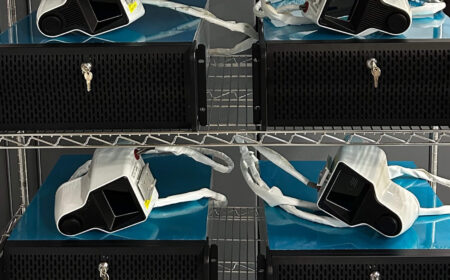
VISIE Ships First Production-Built Computer Vision Systems

Orthopedic robots are closer than ever to navigating without pins or arrays: VISIE Inc. today announced that the first production Read More >

VISIE Achieves Commercial Milestone with Launch of Partner APIs

Enabling rapid, robot-agnostic integration of VISIE’s spatial computing platform AUSTIN, Texas – Feb 12, 2026– VISIE Inc. today announced the Read More >

VISIE Announces Continuous Anatomic Auto Tracking (CAAT) for RA-TKA

AUSTIN, Texas––VISIE Inc., formerly known as Advanced Scanners, announces it has successfully demonstrated Continuous Anatomic Auto Tracking (CAAT) for robotic-assisted Read More >

VISIE™ INC. JOINS NVIDIA INCEPTION TO UP ITS COMPUTING POWER

VISIE Inc., formerly Advanced Scanners, today announced it has joined NVIDIA Inception, a program that empowers early-stage companies revolutionizing industries Read More >

VISIE™ INC., FORMERLY ADVANCED SCANNERS, RAISES $8.2M

VISIE Inc., formerly known as Advanced Scanners, announces it has raised $8.2M in an oversubscribed Series A funding round to Read More >

ADVANCED SCANNERS ANNOUNCES COMPANY REBRAND AND NEW NAME

Advanced Scanners Inc., a 3D computer vision company developing a deep tech optical scanner for orthopedic, neuro, and spine surgery, Read More >

Profile: Aaron Bernstein PhD

“Innovation is a cycle punctuated by moments of inspiration: build something, observe what it does, understand where information is being Read More >