By Doug Fairbanks, CEO of VISIE Executive Summary As surgical robotics becomes an expected component of modern operating rooms, a new frontier is emerging—one …
Executive Summary
As surgical robotics becomes an expected component of modern operating rooms, a new frontier is emerging—one that goes beyond robotic hardware and into real-time, intelligent perception. This white paper introduces the concept of spatial computing as the critical enabler of the next generation of surgical innovation. We argue that the ability to perceive and adapt to dynamic anatomy in real time will become the defining capability for surgical systems over the next decade.
1. What is Spatial Computing in Surgery?
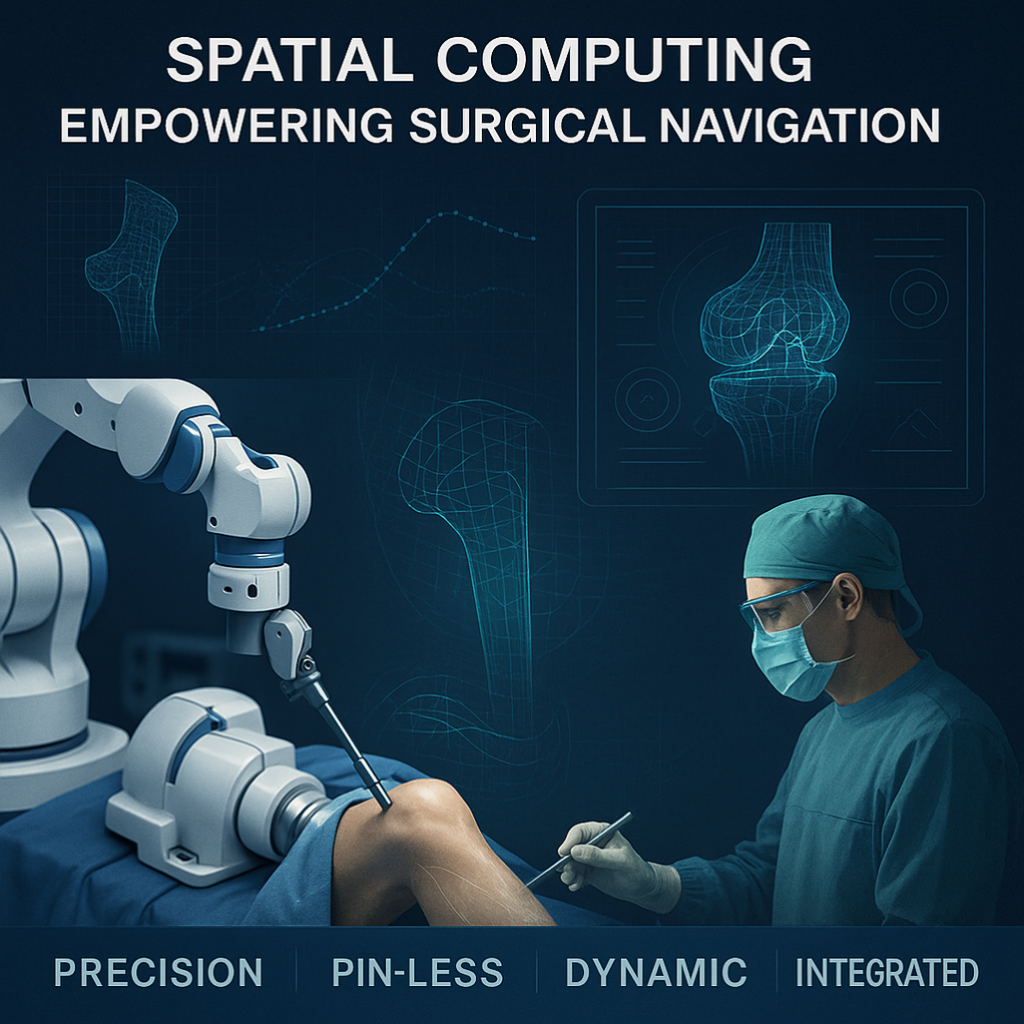
Spatial computing refers to the integration of sensors, machine vision, and real-time analytics to map, interpret, and interact with physical 3D space. In consumer tech, it powers autonomous vehicles and augmented reality. In the operating room, spatial computing enables machines—robots, navigation systems, or handheld tools—to ‘see’ anatomy, track movement, and adjust actions instantly. This marks a paradigm shift from static, pre-planned procedures to dynamic, adaptive workflows.
2. The Constraints of Traditional Surgical Navigation
Current surgical navigation relies heavily on rigid reference frames, manual registration, and static anatomy assumptions. Pin-based systems introduce fracture risks, workflow delays, and inflexibility. Moreover, these systems cannot respond to intraoperative changes such as patient motion, tissue deformation, or surgeon-initiated adjustments.
3. VISIE’s CAAT™ Platform: Real-Time Spatial Computing in Action
VISIE has developed the industry’s first platform for real-time, pin-less spatial computing. At its core is CAAT™ (Continuous Anatomic Auto-Tracking), which enables instant, sub-millimeter registration and dynamic tracking across a surgical procedure. The result is a frictionless, array-less, intelligent system that adapts to live anatomy without surgeon interruption.
4. Why This Matters: Workflow, Economics, and Patient Care
Spatial computing reduces operating time, removes the need for reference pins, minimizes risk, and improves surgeon confidence. Hospitals benefit from fewer complications and faster OR turnover. Strategic partners benefit from an expandable, software-defined platform that can be integrated into multiple device ecosystems—from robotics to navigation and handheld tools.
5. Implications for Industry and Science
Spatial computing positions VISIE not merely as a product company, but as a foundational technology enabler. It opens the door to AI-assisted surgery, data-rich OR analytics, and adaptive robotic systems. For the scientific community, it offers a new dimension for studying kinematics, precision outcomes, and real-time intraoperative feedback.
Conclusion: Defining the Future Standard of Surgical Care
Spatial computing is not a distant ideal – it is a present necessity. VISIE’s CAAT™ platform proves that intelligent, real-time perception can be achieved today, with profound impact on the future of surgical performance. We believe the ability to perceive and respond dynamically will define the next generation of surgical innovation, and VISIE is proud to lead this transformation.